
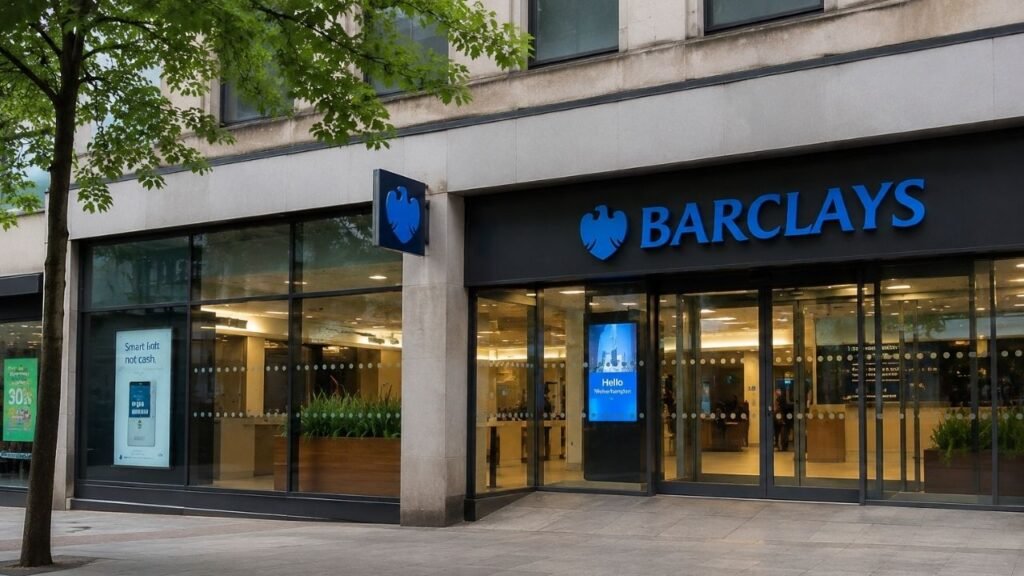

For years, Barclays was associated with the rapid reduction of traditional bank branches across the UK. As more customers moved to mobile apps and online banking, the bank closed hundreds of physical locations and invested heavily in digital services. However, Barclays new bank branches are now becoming an important part of a very different strategy.
In 2026, Barclays has signalled a major change in direction. Rather than continuing with large-scale branch closures, the bank is looking to strengthen and expand its physical presence while continuing to develop its digital banking services. Barclays UK chief executive Vim Maru has said the bank wants to combine digital convenience with human support, including a renewed focus on face-to-face banking and the traditional bank manager role.
This development is significant because Barclays had reduced its network to around 206 UK branches after closing more than 800 locations since 2018. The new strategy therefore represents a notable reversal in the bank’s approach to high-street banking.
Quick Bio Table: Barclays
| Detail | Information |
|---|---|
| Bank name | Barclays |
| Industry | Banking and Financial Services |
| UK focus | Personal, business and wealth banking |
| Current UK branch network | Around 206 branches |
| 2026 direction | Expanding and enhancing the physical branch network |
| Digital services | Mobile banking, online banking and digital support |
| Community services | Barclays Local and Banking Hubs |
| Key executive mentioned | Vim Maru, CEO of Barclays UK |
| Main strategy | Combining digital banking with human, face-to-face support |
| Article keyword | barclays new bank branches |
Barclays New Bank Branches Mark a Major Strategy Change
The announcement surrounding Barclays new bank branches is important because it reverses a long period of branch reductions. Barclays has spent years responding to changing customer behaviour, particularly the rapid growth of mobile and online banking.
Routine transactions that once required a branch visit can now be completed within seconds through a smartphone. Customers can check balances, transfer money, manage payments and perform many other everyday banking tasks without visiting a high-street location.
That shift made maintaining large branch networks increasingly difficult for traditional banks. Barclays consequently closed more than 800 branches from 2018 onwards, leaving around 206 locations in the UK according to recent reporting.
However, the bank now believes physical locations still have an important role. Barclays has paused further large-scale closures and is looking to enhance and invest in its branch footprint. The bank’s strategy is not simply about returning to the old banking model. Instead, it is about creating a hybrid system where customers can move between digital and face-to-face services depending on what they need.
Why Is Barclays Expanding Its Branch Network?
One of the biggest reasons behind the change is customer demand for human assistance.
Digital banking is extremely useful for everyday transactions, but some financial situations are more complicated. Customers may want to discuss mortgages, investments, business finances, fraud, savings or other major financial decisions with a real person.
Barclays has recognised that not every customer wants to solve every problem through an app or automated system. The bank’s leadership has specifically highlighted the importance of ensuring customers are not left struggling with automated support when they need meaningful assistance.
This does not mean Barclays is abandoning digital banking. In fact, the opposite is true. The bank is continuing to invest in its digital channels while increasing the role of branches.
The objective is to give customers more choice.
A customer might use the Barclays app for everyday banking but visit a branch when arranging a mortgage. A small-business owner might use online banking for payments but prefer a face-to-face meeting when discussing borrowing. Someone dealing with suspected fraud may also feel more comfortable speaking directly to a member of staff.
What Will the New Barclays Branches Be Like?
The new generation of Barclays branches is expected to be different from the traditional branches of the past.
Historically, bank branches were heavily focused on routine transactions such as withdrawals, deposits and balance enquiries. With many of these services now available through ATMs and digital banking, modern branches can devote more space and staff time to advice and customer relationships.
The focus is therefore shifting towards areas such as:
- Personal banking advice
- Mortgage support
- Savings and investment guidance
- Business banking
- Financial planning
- Fraud-related assistance
- Complex account problems
- Digital banking support
- Specialist customer consultations
This means a modern Barclays branch is increasingly intended to be a place for conversations and financial guidance rather than simply a location for basic transactions.
Barclays has also indicated that it wants to enhance its branch network alongside its contact centres and app. The bank has already relocated some branches and extended opening hours, adding thousands of additional hours of in-branch availability each year.
Barclays New Bank Branches and the Return of the Bank Manager
Another interesting element of the Barclays strategy is the renewed emphasis on the bank manager.
For many years, the traditional bank manager became less visible as banking moved towards centralised customer-service teams, telephone banking and digital platforms. Barclays is now exploring ways to restore more personalised banking relationships.
This could be particularly important for customers with complicated financial requirements.
For example, a business owner may benefit from having a consistent banking contact who understands the company’s financial position. Similarly, customers planning significant purchases or financial changes may prefer speaking to someone who can explain different options in person.
The return of this relationship-based approach could also help Barclays differentiate itself from digital-only competitors.
Barclays Is Not Simply Reopening Every Closed Branch
One important point for customers is that the new strategy should not be interpreted as Barclays reopening every branch it previously closed.
The bank is taking a more selective approach to its physical network. Recent reporting describes the strategy as expanding and enhancing the branch footprint according to changing customer preferences and local demand.
This means some communities could see new branches or improved facilities, while other areas may continue to rely on Barclays Local, Banking Hubs, Post Office banking or digital services.
The location of future branches will therefore be an important part of Barclays’ strategy.
Barclays Local and Banking Hubs Remain Important
Physical banking does not necessarily mean a traditional Barclays branch in every town.
Barclays already provides different ways for customers to access face-to-face banking. Its Barclays Local service operates in community spaces and other public locations, allowing customers to speak to Barclays staff about money management and digital banking.
The bank also participates in Banking Hubs, where customers can access certain cash services and banking support from multiple financial institutions. Barclays confirms that its wider access-to-cash approach includes branches, Banking Hubs, Barclays Local and Post Office banking.
This gives Barclays more flexibility.
A full branch may make sense in a large town or city with strong customer demand, while a smaller community might be better served by a Banking Hub or Barclays Local service.
What Does the Expansion Mean for Barclays Customers?
For customers, the biggest potential benefit is greater choice.
People who prefer digital banking can continue using the Barclays app and online services. Customers who want face-to-face assistance should have more opportunities to visit a physical location.
This hybrid approach could be particularly useful for customers who are less comfortable with technology. It may also benefit older customers, people with accessibility requirements and those dealing with complex financial situations.
Small businesses could also benefit. Businesses often have different banking requirements from individual customers, particularly when dealing with cash, financing, lending and financial planning.
A stronger physical network could make it easier for business customers to establish relationships with Barclays staff and receive more personalised assistance.
Why Physical Bank Branches Still Matter
The continuing importance of physical branches is part of a wider debate about the future of the UK high street.
As banks closed locations, some towns lost important financial services. This created concerns about access to cash and what is often described as a “banking desert”, where customers have limited access to traditional banking facilities.
Although digital banking is convenient, not everyone has the same level of digital confidence or access.
There are also situations where online banking simply does not provide the same experience as a conversation with a trained adviser.
For that reason, Barclays’ new approach could have implications beyond the bank itself. If the strategy succeeds, other major banks may reassess how they balance digital investment with physical customer service.
Barclays Branch Locator and Opening Hours
Customers looking for a Barclays location should check the bank’s current branch information before travelling because services and opening hours can vary between locations.
Barclays provides a location-finding service that allows customers to check addresses, opening times and available services. The bank also notes that opening hours can sometimes change.
This is particularly important as the bank continues to relocate, enhance and potentially add locations.
Customers should therefore avoid relying solely on older online listings or historical branch information.
The Future of Barclays New Bank Branches
The future of Barclays new bank branches will probably not resemble the branch network of 10 or 20 years ago.
Instead, Barclays appears to be moving towards a hybrid banking model. Digital banking will continue to handle routine transactions, while physical locations will focus increasingly on advice, relationships and complex customer needs.
The bank’s current strategy is particularly notable because it comes after years of branch reductions. Recent 2026 financial reporting continues to describe Barclays as expanding and enhancing its branch network, suggesting that the change is becoming part of the bank’s broader UK strategy rather than simply a short-term experiment.
At the same time, the bank still has to balance the cost of physical locations against changing customer behaviour. A successful expansion will depend on choosing locations where branches can provide meaningful value.
What Customers Should Expect Next
Customers should expect Barclays to continue developing a mixture of traditional branches, community banking services and digital channels.
Some locations may be completely new, while others could be relocated or redesigned. The bank may also continue increasing services at existing branches rather than simply increasing the total number of locations.
The most important change is therefore philosophical: Barclays is no longer treating the physical branch as something that can simply be replaced by an app.
Instead, the bank is attempting to make the branch part of a wider customer-service system.
That could mean using the app for simple transactions, telephone or contact-centre support for certain questions, Barclays Local for community access and full branches for more complicated financial conversations.
Conclusion
The story behind Barclays new bank branches is ultimately a story about the changing nature of banking in the UK. After closing more than 800 branches since 2018 and reducing its network to around 206 locations, Barclays is now moving in the opposite direction by pausing closures and investing in its physical presence.
The strategy does not represent a rejection of digital banking. Instead, Barclays is attempting to combine the speed and convenience of digital services with the reassurance of human support. New and enhanced branches, community banking, Banking Hubs and digital channels could all form part of the bank’s future customer-service model.
For customers, the development could mean greater choice and better access to face-to-face assistance when it matters most. As Barclays continues to implement its new strategy, the locations, services and design of its future branches will be closely watched across the UK. Daily Vora will continue to cover important developments in banking, financial services and changes affecting high-street customers.



Pingback: Thomas Boone Quaid: Age, Family, Life and Biography